


Exhibition Booth Essentials: A Complete Checklist for Exhibitors in Singapore

Preparing for an exhibition involves much more than designing an attractive booth. From the booth structure and furniture to lighting, displays and visitor engagement, every element needs to work together to create a space that is practical, welcoming and aligned with your brand.
Whether you are exhibiting at a trade show, industry conference, corporate exhibition or consumer event, having a clear plan before setup day can help avoid last-minute problems.
Here are the key things to consider when preparing your exhibition booth in Singapore.

1. Start With Your Exhibition Booth Structure
The booth itself is the foundation of your exhibition setup.
Depending on the event, venue and budget, exhibitors may use a standard shell scheme, modular exhibition panels or a fully customised booth. Your choice should take into account the amount of space available, your branding requirements and how you intend to interact with visitors.
Think about:
How many visitors do you expect at one time?
Do you need a private meeting area?
Will you be displaying products?
Do you require storage?
Where should your main branding be positioned?
A well-planned layout should allow visitors to enter and move around the booth comfortably without making the space feel crowded.
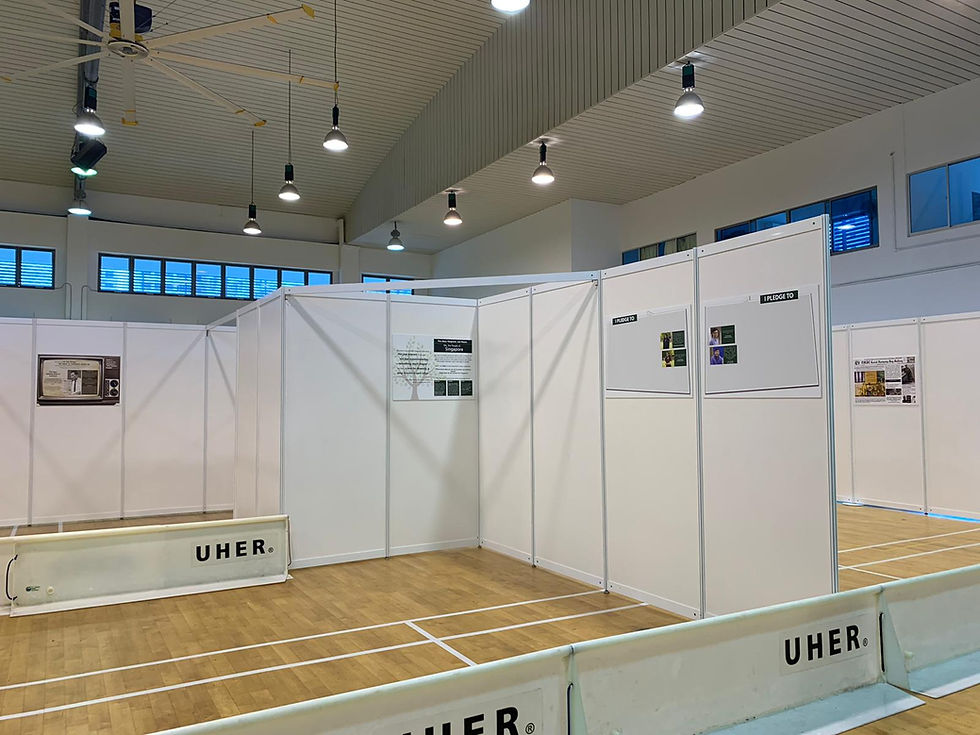
Different panel and booth has different functions
2. Plan Your Furniture Around How Visitors Will Use the Booth
Furniture is often an afterthought, but it can significantly affect how your booth functions.
A reception counter can provide a clear point for welcoming visitors and handling enquiries, while tables and chairs are useful for product demonstrations, meetings or longer conversations.
If your booth requires storage, consider incorporating it into the layout so that brochures, personal belongings and promotional materials can be kept out of sight.
The goal is not to fill the booth with furniture. Instead, choose only what supports the way you expect visitors and staff to use the space.

3. Make Your Branding Easy to See
Your exhibition booth may be competing with dozens or even hundreds of exhibitors for attention.
Your company name, logo and key message should therefore be visible from the main visitor approach.
Consider how your branding will appear on:
Backdrops and booth walls
Reception counters
Hanging or overhead signage
Product displays
Printed graphics
Keep the main message simple. Visitors should be able to understand who you are and what you offer within a few seconds.
It is also worth considering the viewing distance. Text that looks good on a laptop may not be readable from several metres away.
4. Don't Overlook Lighting and Visual Displays
Good lighting can make a significant difference to an exhibition booth.
Products, promotional materials and graphics can easily get lost if the booth is poorly illuminated, particularly in larger exhibition halls where the surrounding environment may already be visually busy.
Lighting can be used to highlight important areas such as product displays, branding or demonstration counters.
If you are showcasing physical products, also think about how they will be presented. Shelving, display counters and other presentation solutions can help keep products organised while making them easier for visitors to view.
5. Decide Whether You Need Screens or AV Equipment
Not every exhibition booth needs a large screen or sound system.
However, AV equipment can be useful if you are presenting videos, product demonstrations, presentations or digital content.
Depending on your objectives, this could include a television, LED display, presentation screen, speakers or microphones.
Before adding AV equipment, consider the viewing distance and content you will be showing. A large screen may be useful for attracting attention from a distance, while a smaller display may be more appropriate for detailed product information.
Also check the exhibition venue's technical and power requirements before the event.
6. Remember the Practical Details
Some of the smallest details can cause the biggest problems during an exhibition.
Before setup day, confirm that you have considered essentials such as power access, extension cables, cable management and storage.
You may also need brochure holders, waste bins, staff seating or a dedicated area for registration and lead collection.
7. Think About Visitor Engagement
A visually attractive booth may get attention, but giving visitors a reason to stop can make the experience more memorable.
Depending on your audience and objectives, you could incorporate an interactive activity, product demonstration, photobooth, game or digital experience.
The activity should support your exhibition objective rather than simply take up space.
For example, a product demonstration can help explain a complicated service, while an interactive activity can create an opportunity for your team to start a conversation with visitors.
8. Check the Venue Requirements Before Setup
Every exhibition venue has its own rules and logistical requirements.
Before the event, confirm details such as:
Booth dimensions and height restrictions
Move-in and setup timings
Power requirements
Approved contractors
Loading and unloading arrangements
Fire and safety requirements
AV and technical restrictions
This is particularly important for custom booth builds and larger equipment.
Planning these details early can prevent unnecessary delays during installation.
Need Help With Your Exhibition Setup?
Planning an exhibition booth involves coordinating multiple elements, from booth structures and furniture to displays, AV equipment and visitor engagement.
Working with an experienced event and rental partner can help simplify the process and ensure the different components work together.
At JNR Entertainment, we provide a range of event equipment and solutions that can be used for exhibitions, trade shows, corporate events and brand activations.
Planning an upcoming exhibition in Singapore? Contact our team to discuss your booth requirements and event setup.


